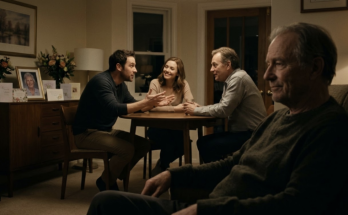
“Mrs. Anderson?” the young man asked politely.
“Yes. Who are you?”
“My name is Jonathan Miller. I’m an attorney representing Henry Whitmore.”
The moment he spoke Henry’s name, my smile disappeared.
For fifty years, I had imagined hearing that name again. But nothing could have prepared me for this moment.
“What does he want?” I asked coldly.
Jonathan glanced down at the cardboard box.
“He wants you to know what really happened on your wedding day.”
I felt as though the ground beneath my feet had shifted.
“Fifty years,” I whispered. “He had fifty years to explain himself.”
“I know,” Jonathan replied. “And he has regretted every single one of them.”
“Why didn’t he come himself?”
The young man’s expression changed.
“Henry is seriously ill. His doctors believe he has very little time remaining.”
Despite everything Henry had done to me, those words hurt more than I expected.
I invited Jonathan inside, turned off the oven, and sat across from him at the kitchen table.
He placed the old cardboard box between us.
Its corners were damaged, and the tape had turned yellow with age. Someone had written my maiden name across the lid.
I immediately recognized Henry’s handwriting.
“He has carried this box everywhere he’s lived since your wedding day,” Jonathan explained.
“He made me promise that I would deliver it to you today. Not yesterday. Not tomorrow. Exactly fifty years after the wedding.”
“What’s inside?”
“Everything he couldn’t bring himself to tell you.”
My hands trembled as I reached for the lid.
But before I could open it, Jonathan gently stopped me.
“There’s something you need to understand first.”
I looked at him impatiently.
“Henry didn’t abandon you because he didn’t love you.”
I shook my head.
“Please don’t insult me. I was there. I heard him shout those words. I watched him run.”
Jonathan lowered his eyes.
“Twenty minutes before the ceremony, Henry received a threat. Someone told him that if he married you, something terrible would happen to your family.”
My mouth fell open.
“What kind of threat?”
“It’s explained inside the box.”
I slowly removed the tape and lifted the lid.
The first thing I saw was a dried white rose.
I recognized it immediately.
It was the flower Henry had worn on his wedding suit.
Beneath it was a photograph of us taken during our high school graduation. We were smiling, holding hands, completely unaware of what the future had planned for us.
There were dozens of envelopes underneath.
Each had my name written across the front.
I picked up the first one.
It was dated the morning after our wedding.
With shaking fingers, I unfolded the letter.
My darling,
I know you must hate me. Perhaps that’s better than knowing the truth. Yesterday, I watched you sitting on the church steps until the sun disappeared. I was across the street the entire time.
You looked so beautiful in the dress you made yourself. I wanted to run toward you, hold you, and beg for your forgiveness.
But I couldn’t.
Someone was watching me, and I knew that returning to you would put everything you loved in danger.
Please believe that leaving you was the hardest thing I have ever done.
Tears blurred my vision.
“He was there?” I whispered. “He watched me sitting on those steps?”
Jonathan nodded.
I remembered how cold it had become that evening. How my wedding dress had dragged across the dirty pavement. How I had begged God to bring Henry back.
All that time, he had been close enough to see me.
I reached deeper into the box.
There were birthday cards, Christmas cards, and letters written on every anniversary of our abandoned wedding.
None had ever been mailed.
Then I discovered something that made my heart nearly stop.
A photograph of Robert and me on our wedding day.
Another photograph showed me holding our firstborn child outside the hospital.
There were pictures of my children graduating, my grandchildren playing, and even Robert’s retirement celebration.
I pushed the box away.
“How did Henry get these?”
“Someone had been sending him photographs and information about your life,” Jonathan explained.
“Who?”
He hesitated.
“That’s one of the reasons I’m here.”
Jonathan reached into his briefcase and removed a faded black-and-white photograph.
“This was taken shortly before your wedding ceremony.”
I studied the picture.
Henry was standing beside a black automobile, looking frightened.
Another man stood directly in front of him, gripping his shoulder.
The moment I recognized that man’s face, I dropped the photograph.
“No. That’s impossible.”
It was my father.
The same father who had held me while I cried after Henry disappeared.
The same father who had called Henry a coward.
The same father who had encouraged me to leave town and never look back.
“My father threatened Henry?”
Jonathan nodded slowly.
“According to Henry, yes.”
“But why? My father knew how much I loved him!”
Jonathan opened another folder.
“Your father was hiding something. Something Henry discovered shortly before your wedding.”
I stared at him, unable to speak.
“Henry intended to expose it. Your father made certain that he couldn’t.”
I felt sick.
For fifty years, I had blamed Henry for destroying my happiness.
Now I was discovering that the man who had comforted me might have been responsible for everything.
But Jonathan wasn’t finished.
“There’s another photograph you need to see.”
He placed a much more recent picture on the table.
Two elderly men were sitting together on a wooden bench outside a hospital.
One was Henry.
The other was Robert.
My beloved husband.
The man who had promised never to keep secrets from me.
The man whose hand I had held as he took his final breath.
I stared at the photograph in disbelief.
“Robert never met Henry,” I whispered. “He told me so himself.”
Jonathan’s expression softened.
“I’m afraid they knew each other very well.”
My eyes filled with tears.
“How long?”
“That’s something your husband wanted to explain personally.”
Jonathan removed one final envelope from his briefcase.
My name was written across the front in Robert’s familiar handwriting.
I recognized the blue ink he always used when writing birthday cards for our grandchildren.
“This was written shortly before Robert passed away,” Jonathan explained.
“He entrusted it to Henry with instructions that it should eventually be given to you.”
I pressed the envelope against my chest.
For four years, I would have given anything to receive one more letter from my husband.
But now I was terrified to read it.
I carefully opened the envelope.
The first sentence shattered everything I thought I knew about my marriage.
My darling wife, before you read any further, please understand that every moment I spent loving you was real. But the circumstances that brought us together were not an accident.
Henry didn’t simply disappear from your life.
I helped him disappear.
I gasped.
Jonathan reached across the table as the letter slipped from my trembling hands.
“There’s more,” he whispered.
“Much more.”
And when I finally gathered the courage to read Robert’s next sentence, I discovered a secret that connected my father, Henry, and my husband in a way I could never have imagined.
But the most devastating revelation was still waiting at the bottom of that old cardboard box.
PART 3 — THE CONFESSION MY HUSBAND TOOK TO HIS GRAVE
“I helped him disappear.”
I read those five words again and again, desperately hoping I had misunderstood them.
Robert couldn’t have done something like that.
He was the man who had held me through nightmares about my abandoned wedding. He had promised that he would never hurt me the way Henry had.
Yet here was his confession, written in his own handwriting.
I forced myself to continue reading.
When I first met you in Chicago, you believed I was simply a stranger who happened to walk into the diner where you worked.
The truth is, Henry had given me your address.
He asked me to find you, make sure you were safe, and help you if you ever needed anything.
I never intended to fall in love with you. But I did.
I lowered the letter.
“Robert knew Henry before he met me?”
Jonathan nodded.
“They had worked together briefly. Henry trusted him more than anyone else.”
I felt betrayed in a way I couldn’t explain.
Every beautiful memory of my marriage suddenly seemed different.
Our first conversation.
Our first date.
The afternoon Robert proposed.
Had Henry been behind all of it?
I continued reading.
Henry told me what your father had done. He made me promise never to reveal his whereabouts.
When you and I became close, I wrote to Henry and told him everything.
I expected him to be angry. Instead, he asked me one question.
Does she smile again?
When I told him you did, he gave me his blessing.
A sob escaped my throat.
I remembered Robert once telling me that happiness sometimes came from unexpected places.
Had he been thinking about Henry when he said that?
“Why did my father threaten him?” I asked Jonathan.
“What could possibly have been so terrible?”
The attorney reached into the cardboard box and removed a thick brown folder.
“Your father was the treasurer of a local charitable organization that collected money for struggling families.”
I nodded.
Everyone in town had respected my father for his generosity.
“Shortly before your wedding, Henry discovered that your father had been stealing money from that organization for years.”
I stared at Jonathan.
“No. My father would never steal from poor families.”
“Henry had documents proving otherwise.”
He placed several faded financial records in front of me.
“Your father discovered that Henry intended to report him after your wedding. That’s when he threatened him.”
“What did he threaten to do?”
Jonathan took a deep breath.
“He had arranged financial records to make it appear that Henry’s mother was involved in the theft. He threatened to turn those records over to the police unless Henry abandoned you and left town.”
Henry’s mother.
A gentle woman who had treated me like her own daughter.
She had been seriously ill at the time, and Henry had worked tirelessly to pay her medical expenses.
“Henry believed his mother wouldn’t survive the stress of a criminal investigation,” Jonathan continued. “Your father knew exactly how to pressure him.”
“But why humiliate me at the altar?”
“Your father wanted you to hate Henry enough that you would never search for him. He threatened to carry out his plan unless Henry publicly rejected you.”
I covered my face and cried.
My own father had watched me spend hours making my wedding dress.
He had walked me down the aisle.
He had kissed my forehead before placing my hand in Henry’s.
All while knowing exactly what was about to happen.
“How could he do that to his own daughter?”
Jonathan remained silent.
There was no answer that could make such cruelty understandable.
After several minutes, I returned to Robert’s letter.
There is something else I must confess.
Years after we married, your father died. Henry was finally free to return and tell you everything.
He contacted me and asked whether he could see you.
I told him no.
My heart sank.
I was afraid of losing you. I knew how deeply you had once loved him, and I couldn’t bear the thought that you might leave me.
Henry respected my request.
He told me that your happiness mattered more than his need to explain himself.
I spent the rest of my life feeling ashamed of what I had done.
I pressed the letter against my chest.
Robert had loved me.
I knew that.
But he had also allowed me to carry a wound that could have been healed decades earlier.
“Did Henry ever marry?” I whispered.
“No,” Jonathan answered.
“Did he have children?”
“No.”
I closed my eyes.
While I had built a beautiful family, celebrated birthdays, welcomed grandchildren, and grown old beside Robert, Henry had built a different life without me.
“Your husband eventually contacted Henry again,” Jonathan explained. “Shortly before Robert died, he asked Henry to visit him at the hospital.”
I looked at the photograph of the two elderly men.
“What did they talk about?”
“Robert apologized. He begged Henry to forgive him.”
“And did he?”
“Yes.”
Jonathan’s voice cracked slightly.
“Henry told him that giving you a happy life was something he would always be grateful for.”
I couldn’t hold back my tears.
Then Jonathan pointed toward the cardboard box.
“There’s one more thing inside.”
At the very bottom, beneath the letters and photographs, was a small velvet jewelry box.
I recognized it immediately.
Henry had purchased our wedding rings from a little jewelry store near the church.
I opened it.
Inside was the wedding band he had intended to place on my finger fifty years earlier.
Beside it was a tiny folded note.
I bought this ring believing I would spend my entire life beside you.
Life had other plans.
But I never stopped wishing you happiness.
I held the ring between my fingers, remembering the young man who had once promised me forever.
“Where is Henry now?” I asked.
Jonathan hesitated.
“He’s in a hospice facility outside Chicago.”
I looked up sharply.
“Chicago?”
“He moved here several years ago.”
“Does he know you’re here?”
“Yes. He’s been waiting for my call.”
I stood immediately.
“Take me to him.”
Jonathan appeared surprised.
“Are you certain?”
“I’ve waited fifty years for answers. I’m not waiting another day.”
Just then, Jonathan’s cellphone rang.
He glanced at the screen and quickly answered.
“Hello?”
His expression changed.
“What? When did that happen?”
He turned away from me, listening intently.
I felt a terrible sense of dread.
When he finally ended the call, his face had gone pale.
“Mrs. Anderson, that was Henry’s nurse.”
I gripped the edge of the table.
“Is he dead?”
“No. But his condition has suddenly deteriorated.”
I grabbed my coat and Robert’s letter.
“We need to leave. Now.”
Jonathan nodded, but before we reached the door, he stopped me.
“There’s something Henry asked me not to tell you unless you decided to visit him.”
“What is it?”
He looked directly into my eyes.
“Henry has another visitor waiting at the hospice. Someone who has been searching for you for more than forty years.”
“Who?”
Jonathan’s answer left me completely speechless.
“Your younger sister.”
I stumbled backward.
“My younger sister?”
I had grown up believing I was an only child.
And suddenly, I realized that my father’s betrayal went much deeper than a ruined wedding.
The truth about my family was about to change everything I thought I knew about my entire life.
PART 4 — THE WOMAN WAITING BESIDE HENRY’S DEATHBED
“My younger sister?” I repeated.
Jonathan nodded.
“Her name is Margaret. She’s sixty-seven years old.”
I shook my head in disbelief.
“That can’t be true. My parents only had one child.”
“Your father had another daughter with a woman named Evelyn Carter. Your mother never knew about her.”
I sank back into my chair.
How many secrets could one family possibly hide?
“Does Margaret know who I am?”
“Yes. She’s been hoping to meet you for decades.”
“Why didn’t she contact me?”
“Your father made certain that neither of you knew the other existed. By the time Margaret discovered your identity, you had already moved away.”
I looked toward the cardboard box.
“Did Henry know about her?”
Jonathan nodded.
“In fact, Margaret was another reason your father was so desperate to silence him.”
I grabbed my coat.
“Please. Take me to the hospice.”
During the forty-minute drive, I barely spoke.
I watched the buildings pass outside the window while memories of my childhood flooded my mind.
My father had always demanded honesty from everyone around him.
He had punished me for telling even the smallest lie.
Yet his entire reputation had been built upon deception.
When we finally arrived, Jonathan led me through a quiet hallway.
Outside room 214 sat an elderly woman wearing a pale blue cardigan.
She stood the moment she saw us.
Her eyes widened.
I immediately noticed something familiar about her face.
She had my father’s eyes.
And when she smiled nervously, I saw a resemblance to myself.
“Elizabeth?” she whispered.
I nodded.
Her lips began trembling.
“Oh, my goodness. It’s really you.”
For several seconds, neither of us moved.
Then she opened her arms.
I stepped forward and embraced the sister I had never known existed.
She began sobbing against my shoulder.
“I’ve waited so long for this.”
I held her tightly.
We were two elderly women who should have shared childhood memories, birthday celebrations, and countless ordinary moments together.
Instead, we were meeting for the first time outside the room of a dying man.
“How did you find Henry?” I asked.
Margaret wiped her tears.
“He found me.”
She explained that Henry had discovered her mother’s identity while investigating my father’s financial crimes.
My father had been using some of the stolen money to maintain a secret household.
When Henry uncovered the truth, my father threatened him into silence.
“But Henry never forgot about us,” Margaret continued. “After my mother died, he helped me pay for college. He attended my graduation. When I got married, he was there.”
I stared at her.
“He did all that?”
“Yes. He never wanted recognition. He simply said that children shouldn’t suffer because of their parents’ mistakes.”
Margaret reached into her handbag and pulled out a photograph.
It showed a much younger Henry standing beside her on her wedding day.
“He became the closest thing I ever had to a brother.”
My heart ached.
The man I had spent decades believing was selfish and heartless had quietly devoted himself to helping others.
Just then, a nurse stepped into the hallway.
“Mr. Whitmore is awake. He’s asking for Elizabeth.”
My heart nearly stopped.
Jonathan touched my shoulder.
“Go ahead. He’s been waiting for you.”
I slowly entered the room.
An elderly man lay beneath a white blanket, his breathing shallow and his face terribly thin.
His hair had turned completely white.
His hands looked fragile.
But when he turned toward me, I recognized those eyes immediately.
They were the same eyes I had fallen in love with when I was seventeen.
“Elizabeth?”
His voice was barely a whisper.
I approached his bedside.
“Hello, Henry.”
Tears immediately rolled down his cheeks.
“You came.”
I sat beside him.
“You certainly took your time explaining yourself.”
A weak smile appeared on his face before he began crying again.
“I’m so sorry.”
Those three words broke something inside me.
For fifty years, I had imagined confronting him.
I had imagined shouting, demanding answers, and making him understand how deeply he had hurt me.
But now, looking at the frail man before me, I couldn’t find the anger I had carried for so long.
“Why didn’t you trust me enough to tell me the truth?” I whispered.
Henry closed his eyes.
“I was young and frightened. Your father had convinced me that my mother would suffer if I disobeyed him. I thought I was protecting everyone.”
“You should have let me decide.”
“I know.”
His voice cracked.
“I’ve regretted that every day of my life.”
I reached for his hand.
“Did you really watch me sitting outside the church?”
He nodded.
“I nearly went back a dozen times.”
“Why didn’t you?”
“Because I was a coward, Elizabeth. I thought sacrificing our future was the only way to save my mother.”
He began trembling.
“I heard you calling my name. I’ve never forgotten the sound.”
I lowered my head and cried.
Henry gently squeezed my fingers.
“Please don’t think your life with Robert was a mistake.”
I looked at him.
“He loved you. I saw it in every photograph he sent me. You had a beautiful family.”
“Robert should have told me the truth.”
“Yes,” Henry whispered. “And so should I.”
For the first time, I realized that forgiveness didn’t require pretending that nobody had done anything wrong.
Both men had made decisions that should have belonged to me.
Both had loved me.
And both had hurt me.
“Henry, why did you wait until today?”
He looked toward Jonathan, who was standing quietly near the doorway.
“Because fifty years ago, I made you a promise that I couldn’t keep. I wanted to give you something on the anniversary of that promise.”
Jonathan stepped forward carrying a large sealed envelope.
Henry motioned for him to hand it to me.
“What is this?” I asked.
“Something I’ve been working on for a very long time.”
I opened the envelope.
Inside were several legal documents and a photograph of a beautiful white house surrounded by rose gardens.
My breath caught.
I recognized the house.
When Henry and I were teenagers, we used to walk past it and imagine raising our children there.
We had called it our dream home.
“You bought it?”
Henry nodded.
“Thirty-two years ago.”
I stared at him in disbelief.
“But why?”
“Read the documents.”
As I turned the pages, I discovered that Henry had established a charitable foundation in my name.
The house had been converted into a temporary residence for women and children escaping difficult circumstances.
Over the years, hundreds of families had received shelter, food, education, and financial assistance there.
“You did all this?”
Henry smiled weakly.
“I couldn’t build the home we dreamed about together. So I built a home where other people could begin again.”
I pressed my hand against my mouth.
There was no way to describe what I felt.
Then Margaret stepped into the room.
“There’s something else you should know, Elizabeth.”
She handed me a thick photograph album.
Inside were pictures of families who had received help from Henry’s foundation.
Children smiling on their first day of school.
Mothers receiving keys to new apartments.
Young adults graduating from college.
Every photograph represented a life that had been changed.
But when I reached the final page, I froze.
There was a photograph of Robert standing beside Henry in front of the white house.
Underneath it were the words:
Two men. One promise. To make sure something good came from the pain we caused.
“Robert helped you build this?” I whispered.
Henry nodded.
“For nearly thirty years.”
I began crying harder than ever.
My husband and my former fiancé had secretly worked together for decades.
Their friendship had survived guilt, heartbreak, and circumstances that should have made them enemies.
Suddenly, Henry began coughing violently.
The nurse hurried into the room.
His breathing became increasingly difficult.
“Elizabeth,” he whispered desperately.
I leaned closer.
“I’m here.”
“There’s one last thing Robert asked me to tell you.”
“What is it?”
Henry struggled to catch his breath.
“He said you would probably be angry when you learned the truth. He understood that. But he wanted you to know that the happiest moment of his life wasn’t your wedding day.”
I squeezed Henry’s hand.
“What was it?”
“The morning you told him you were finally no longer afraid of being abandoned.”
Tears streamed down my cheeks.
Henry reached beneath his pillow and pulled out a small, faded envelope.
“I have something else for you.”
Inside was a handwritten note I had given him when we were eighteen.
I remembered writing it beneath an old oak tree near our high school.
It contained a simple promise.
No matter where life takes us, I hope we both find happiness.
Henry looked into my eyes.
“Did you, Elizabeth?”
I nodded through my tears.
“Yes, Henry. I did.”
He smiled.
“Then perhaps my life wasn’t wasted after all.”
Before I could answer, his eyes slowly closed.
The nurse rushed toward him.
Margaret began crying.
Jonathan stepped back.
I refused to release Henry’s hand.
“Henry! Please! Open your eyes!”
I had finally found him after fifty years.
And now I was terrified that I would lose him before I could say the words he had waited a lifetime to hear.
But what happened next would give me the opportunity to make peace with both the man I had lost at the altar and the man I had loved for nearly five decades.
PART 5 — THE GOODBYE THAT FINALLY HEALED FIFTY YEARS OF HEARTBREAK (FINAL PART)
“Henry! Please, open your eyes!”
The nurse gently placed a hand on my shoulder.
“Ma’am, he’s still with us. But he’s extremely weak.”
I refused to move from his bedside.
Margaret stood behind me, crying quietly, while Jonathan lowered his head.
After several agonizing moments, Henry slowly opened his eyes.
“Elizabeth?” he whispered.
“I’m here, Henry. I’m not going anywhere.”
He looked at me with the same tenderness I remembered from our youth.
“There’s something I need to ask you.”
“Anything.”
“Can you ever forgive me?”
I looked down at our intertwined hands.
For fifty years, I had carried the humiliation of that abandoned wedding.
I had questioned my worth, doubted my judgment, and wondered why the boy who had promised to love me forever had suddenly decided I wasn’t enough.
But now I finally understood.
“Henry, what you did broke my heart. You should have trusted me with the truth. You should have allowed me to make my own decisions.”
He nodded weakly.
“I know.”
“But I don’t want either of us to spend another moment carrying that pain.”
Tears gathered in his eyes.
“I forgive you, Henry.”
His lips trembled.
“Thank you.”
I leaned forward and kissed his forehead.
“And I hope you can forgive yourself.”
For the first time since I entered the room, his expression appeared peaceful.
He glanced toward Margaret.
“Promise me you’ll take care of each other.”
Margaret approached the bed and took his other hand.
“We promise.”
Henry smiled.
Then he looked at me one final time.
“You know, Elizabeth, you were the most beautiful bride I’d ever seen.”
I laughed through my tears.
“And you were the most troublesome groom.”
He managed a quiet chuckle.
For a brief moment, we were seventeen again, sitting beneath the old oak tree, imagining a future neither of us could predict.
Then Henry whispered something I would remember for the rest of my life.
“I’m glad you found happiness, even if it wasn’t with me.”
I squeezed his hand.
“Goodbye, Henry.”
His eyes slowly closed.
This time, they didn’t open again.
The nurse checked him before gently lowering her head.
“I’m so sorry.”
Margaret began sobbing.
I remained beside Henry, holding his hand until I finally found the strength to let go.
Fifty years earlier, he had left me without a goodbye.
This time, we had been given one.
Three days later, I attended Henry’s funeral.
I expected a small gathering because he had never married or had children.
Instead, the church was overflowing.
Former employees, neighbors, families from his charitable foundation, and people whose lives he had quietly changed filled every available seat.
One woman approached me holding the hand of her little daughter.
“Are you Elizabeth?”
“Yes.”
She smiled through her tears.
“Henry told me that the foundation was named after someone who taught him what kindness meant.”
Another woman explained that Henry had helped her escape homelessness with her three children.
A young doctor told me that Henry had paid for part of his education.
An elderly man said Henry had helped him rebuild his life after losing everything.
Person after person shared stories of his generosity.
Henry had never had children of his own, but his kindness had reached generations.
When Jonathan invited me to speak, I walked toward the front of the church.
I looked at the photograph beside Henry’s coffin.
“I once believed this man had destroyed my future,” I began.
“For fifty years, I remembered him as the man who walked away from me on our wedding day.”
The church became silent.
“But today, I see a room filled with people whose futures he helped rebuild.”
My voice cracked.
“Henry made mistakes. Some of them caused tremendous pain. But his life was also filled with kindness, generosity, and the courage to do better.”
I looked toward Margaret.
“He gave me something I never knew I was missing. A sister.”
Margaret covered her mouth as tears streamed down her cheeks.
“And before he left this world, he gave me something else. The truth.”
After the funeral, Jonathan approached me with another envelope.
“Henry left specific instructions concerning his estate.”
I shook my head.
“I don’t need his money.”
Jonathan smiled gently.
“He anticipated that response.”
Henry had arranged for most of his estate to support the charitable foundation. He had also named Margaret and me as members of its governing board, provided we agreed.
“He wanted the two of you to continue what he started.”
I looked at Margaret.
She reached for my hand.
“What do you think, sister?”
That single word made me smile.
“I think Henry would be disappointed if we said no.”
Several weeks later, Margaret and I visited the white house that Henry and I had once dreamed of owning.
Children were playing in the garden.
Women were sitting on the porch, drinking coffee and laughing.
Inside, photographs covered the walls, documenting decades of kindness.
Near the entrance stood a small brass plaque.
ELIZABETH HOUSE — EVERYONE DESERVES A SECOND CHANCE.
I stood before it for a long time.
Henry and I had once imagined filling that house with the laughter of our own children.
Instead, it had become a place where countless children could feel safe.
It wasn’t the future we had imagined.
But it was something beautiful.
That evening, I returned home and took Robert’s confession from the cardboard box.
I read every word again.
Then I walked to the cemetery where my husband was buried.
I placed fresh flowers beside his headstone and sat on the little bench nearby.
“Robert, you should have told me,” I whispered.
“You had no right to keep the truth from me.”
The wind moved gently through the trees.
“But I remember the life we shared. The mornings you made me coffee. The nights you stayed awake when our children were sick. The way you held my hand when I was frightened.”
Tears rolled down my cheeks.
“I won’t pretend your mistake didn’t hurt me. But I won’t pretend our happiness wasn’t real, either.”
I placed my hand against his headstone.
“I forgive you, too.”
For the first time in years, I left the cemetery without feeling that something remained unsaid.
Over the following months, Margaret became an inseparable part of my life.
My children welcomed her with open arms.
My grandchildren immediately began calling her Aunt Margaret.
We spent afternoons exchanging photographs, sharing childhood stories, and discovering little similarities between us.
We both loved cinnamon in our coffee.
We both cried during old romantic movies.
And neither of us could resist buying unnecessary things for our grandchildren.
We couldn’t recover the decades our father had stolen from us.
But we could make sure he didn’t steal another day.
One year after Henry’s death, Margaret and I organized a celebration at Elizabeth House.
We planted two rose bushes in the garden, one in memory of Henry and the other in memory of Robert.
Between them, we placed a wooden bench.
On its back was a small engraved message:
WE CANNOT CHANGE THE PAST, BUT WE CAN CHOOSE WHAT GROWS FROM IT.
Later that afternoon, my youngest granddaughter found me sitting on the bench.
“Grandma, if you could go back fifty years and change what happened at your wedding, would you?”
I thought about Henry.
I thought about Robert.
I thought about my three children, my six grandchildren, my newfound sister, and all the families who had found safety inside that beautiful white house.
Then I smiled.
“I wish people had been more honest with me, sweetheart. I wish nobody had made those choices on my behalf.”
She looked at me thoughtfully.
“But would you change your life?”
I pulled her close.
“No, darling. Because changing my life might mean losing you.”
She wrapped her arms around me.
That evening, I returned home and opened Henry’s cardboard box one final time.
I placed Robert’s letter beside Henry’s wedding ring.
Then I added a photograph of Margaret and me surrounded by my children and grandchildren.
On the back, I wrote:
Dear Henry and Robert,
For fifty years, I believed that the worst day of my life was the day I stood alone at the altar.
Now I understand that although that day broke my heart, it did not destroy my future.
I found love. I became a mother and a grandmother. I discovered a sister. And I learned that even the deepest wounds can eventually heal.
I wish you had both trusted me with the truth.
But I refuse to let your mistakes take away the happiness I have left.
I forgive you both.
And now, at last, I am at peace.
With love, Elizabeth.
I closed the box and placed it beside my family photograph.
It was no longer a box filled with painful secrets.
It was a reminder of how far I had come.
Fifty years earlier, a frightened young woman had sat alone on the steps of a church, believing her life was over because the man she loved had walked away.
She couldn’t have known how much happiness was still waiting for her.
And now, at seventy-three years old, surrounded by the people I loved, I finally understood something that had taken me a lifetime to learn.
Sometimes, the ending we never wanted becomes the beginning of a life we wouldn’t trade for anything.
Forgiveness cannot return the years we have lost, but it can give us the freedom to enjoy the years we have left.
THE END. ❤️